How to Deep Clean a Room: The Ultimate Step-by-Step Guide In 2026 for a Spotless Sanctuary
You know the feeling. You walk into a room—maybe your living room after a busy week, or a bedroom that’s become a catch-all—and it just feels…heavy.
Table of Contents
That’s because there’s a world of difference between a surface tidy and a true deep clean. A deep clean isn’t about quick fixes; it’s a systematic reset. It targets the hidden grime in baseboards, the dust bunnies under furniture and the fingerprints on every switchplate.
In this guide, you will find all the tips and tricks you need to master How to Deep Clean a Room efficiently and thoroughly.
Why does it matter? The benefits are profound:
- Breathe Easier: Reduces dust, pet dander, and allergens dramatically improving indoor air quality.
- Clear Your Mind: A cluttered, dirty environment fuels anxiety. A deep-cleaned space promotes mental clarity and reduces stress.

If you’re ready to move beyond wiping counters and make your space sparkle, you’re in the right place. This definitive guide will walk you through exactly how to deep clean a room from top to bottom, using a professional, efficient method. Follow these steps to learn How to Deep Clean a Room.
Let’s begin where every successful project does: with a solid plan. First up, gathering your arsenal and mastering the crucial pre-cleaning step that makes all the difference.
Pre-Deep Clean Preparation: Your Game Plan for Success
You cannot deep clean a cluttered space. This step is about creating physical and mental space to work effectively.
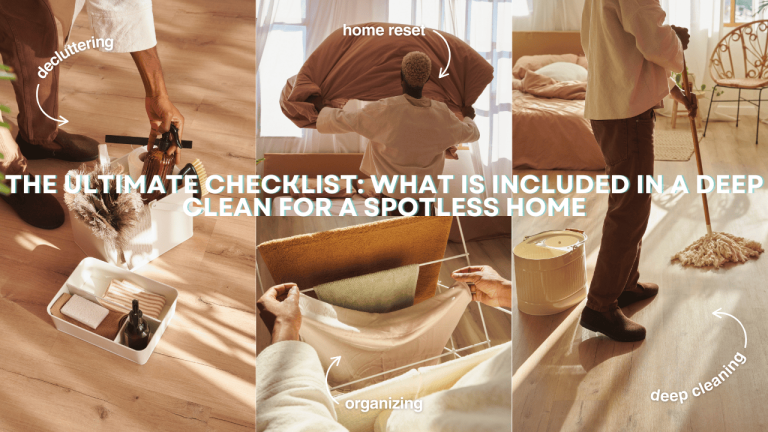
- The “Four-Box” Method: Bring in four containers (boxes, bins, bags). Label them: TRASH, DONATE, RELOCATE, PUT AWAY.
- Work One Section at a Time: Start in one corner of the room. Pick up every item that’s out of place. Ask yourself: Is this trash? Does it belong in another room? Do I need to keep it here? Be decisive.
- Clear Surfaces Completely: Remove everything from floors, tabletops, desks, and nightstands. This allows you to clean the surface itself thoroughly, not just around your stuff. Once surfaces are clear, you’re ready for the real transformation.
Once your supplies are staged and your surfaces are clear, you’ve already done 30% of the mental work. Now, with a clear space and a full caddy, you’re ready to execute the deep clean itself efficiently and effectively.
The Step-by-Step Guide on How to Deep Clean Any Room
Now for the main event. This is your master blueprint for a transformative clean. We follow the golden rule of professional cleaners: work from top to bottom and dry to wet.
Follow these steps in order for maximum efficiency and a guaranteed deep clean.
Step 1: High and Dry – Dusting from the Top Down
Start high where dust settles. Always use a damp or treated microfiber cloth—dry dusting just spreads particles into the air.
- Ceiling & Corners: Check for cobwebs in ceiling corners, light fixtures, and ceiling fan blades (place an old pillowcase over the blade and pull it off to trap dust).
- Upper Surfaces: Dust crown molding, the tops of door frames, window sills, and the upper parts of curtains/blinds.
- Furniture & Electronics: Move to bookshelves, picture frames, lampshades, and TV screens. Don’t forget air vents!
Step 2: Focus on Fabrics and Soft Surfaces
These are allergen magnets. Tackle them before you stir up more dust from the floor.
- Upholstery: Use your vacuum’s upholstery attachment on all cushions, chair seats, and sofa arms. Remove cushions to vacuum underneath.
- Bedding & Curtains: Strip beds and wash all bedding. If curtains are machine-washable, launder them according to the label.
- Mattress: Vacuum the mattress thoroughly on all sides. For a refresh, sprinkle with baking soda, let sit for 15 minutes, then vacuum.
Step 3: The Detailed Vacuum and Mop
Now you capture all the dust and debris that has fallen. This is the most satisfying step.
- The Vacuum Pass: Vacuum slowly and with purpose. Go over high-traffic areas in multiple directions to lift flattened carpet fibers. Use the crevice tool along every baseboard, under furniture edges, and in room corners.
- Pre-Mop Sweep: On hard floors, sweep or dry mop to get up large debris first.
- The Mop Pass: Use hot water and your chosen cleaner. Mop in sections, rinsing your mop head frequently. For a true disinfectant clean, allow the solution to sit on the surface for the contact time listed on the product label.
Step 4: Tackle the Often-Forgotten “Deep Clean” Spots
This is what separates a surface clean from a true deep clean. These are the spots you don’t see daily but collect grime.
- Doors & Frames: Wipe down the entire door, both sides, including the handle and the frame.
- Light Switches & Plates: These are high-touch germ hotspots. Disinfect them.
- Under & Behind: Move light furniture and appliances to clean underneath. Pull out the couch and vacuum behind it.
- Inside & Out: Wipe out the inside of trash cans, clean cabinet fronts and handles, and disinfect remote controls.
Step 5: The Final Touches for a Lasting Clean
Finish strong so your effort lasts.
- Empty & Refresh: Take out all trash and recycling. Line bins with fresh bags.
- Let it Dry: Ensure all surfaces are completely dry before replacing items or walking on floors to prevent streaks and moisture marks.
- The Reward: Add a pleasant, subtle scent—a few drops of essential oil on a cotton ball in the trash can, or a fresh bouquet of flowers. Enjoy the sparkling, refreshed air.
You’ve done it! By following this top-to-bottom system, you’ve systematically cleaned every inch of your room. The process might feel meticulous, but the result—a comprehensively clean, fresh, and healthy space—is undeniable.
Mobile & Scannable Features:
- Clear Steps: Numbered and bolded for easy following.
- Key Rule Highlighted: “Top to bottom, dry to wet” is emphasized.
- Action Sub-bullets: Each step has specific, actionable tasks.
- Pro-Tips Integrated: Pillowcase trick for fans, baking soda for mattresses, disinfectant contact time.
- Visual Break: The line separator sets the guide apart.
- Next Step Hint: The final paragraph naturally leads to the “Pro Tips” section for optimization. (“Want to make this process even faster next time? Let’s look at some expert efficiency hacks.”)
Pro Tips to Make Your Deep Clean Faster & More Effective
You’ve mastered the system. Now, let’s elevate it. These aren’t just tips—they’re force multipliers. Adopt these strategies from cleaning professionals and seasoned homeowners to cut your time, boost your results, and make maintenance a breeze.
1. The “Two-Bucket” Mopping System
Banish dirty mop water forever. This restaurant-grade method ensures you’re cleaning with a clean tool.
- Bucket 1 (Clean): Hold your fresh cleaning solution.
- Bucket 2 (Dirty): Hold plain water for rinsing your mop.
- Process: Dip mop in solution, clean a floor section, then rinse/wring mop in the rinse bucket before returning to the solution bucket. This keeps grime from contaminating your clean water, so you’re not just spreading dirt around.
2. Work in a “Clockwise” Pattern
Eliminate decision fatigue and ensure you miss nothing.
- Start at the door and move systematically around the room (like a clock). Clean everything at each “station”—walls, surfaces, floors—before moving to the next section. This creates a visual “done” zone that keeps you motivated.
3. Use Your Vacuum as a Multi-Tool
It’s not just for floors. Attachments are your secret weapon.
- Dust Brush Attachment: Use it to gently dust blinds, lampshades, and delicate knick-knacks before wet-cleaning.
- CreVice Tool: The MVP for deep cleaning. Use it on window tracks, appliance seals, radiator fins, and along every inch of baseboard.
- Upholstery Tool: Don’t stop at furniture—use it on mattresses, stair risers, and even walls to remove dust and pet hair.
4. The 10-Minute “Reset” Rule for Maintenance
A deep clean lasts longer if you maintain it. Avoid letting clutter and dust build back up.
- Set a timer for 10 minutes each evening. Use it to:
- Return misplaced items to their homes.
- Wipe down high-touch surfaces (counters, tables).
- Do a quick vacuum of high-traffic areas.
- This tiny daily habit prevents the need for a major deep clean as frequently.
5. Label & Simplify Your Supplies
educe setup time for your next cleanhttps://www.cleaninginstitute.org/.
- Keep your “deep clean caddy” stocked and ready in a closet.
- Use clear, labeled spray bottles. Consider making your own all-purpose cleaner (a simple mix of distilled white vinegar, water, and a drop of dish soap works for many surfaces) to save money and control ingredients.
6. Listen to a Podcast or Audiobook
Turn a chore into “you” time. Engaging your brain with a story, podcast, or upbeat playlist makes the time pass faster and can even make cleaning enjoyable.
Integrate just one or two of these pro tips into your next session. You’ll notice a significant difference in speed and satisfaction. A deep clean isn’t about working harder—it’s about working smarter with a proven strategy.
Mobile & Scannable Features:
- Tips with Clear Numbers: Easy to scan and reference.
- Strong Opening Hook: “Force multipliers” positions tips as powerful upgrades.
- Specific, Uncommon Advice: “Two-Bucket System,” “Clockwise Pattern” go beyond basic advice.
- Actionable Micro-Habits: The “10-Minute Reset” is a concrete, sustainable takeaway.
- Bolded Key Tools & Methods: Emphasizes the core action within each tip.
- Psychologically Smart Final Tip: Addresses the mental game of cleaning, making it relatable.
Conclusion
And there you have it—your complete roadmap for how to deep clean a room, from the essential prep work to the professional finishing touches. Remember, the magic isn’t in a single heroic effort, but in the powerful system: Prepare, work top-to-bottom, and never skip the hidden spots.
The result is more than just a clean room. It’s the fresh air, the mental clarity, and the deep sense of accomplishment that comes from creating a truly refreshed sanctuary.
Your Next Step: Let’s Make It Easy!
To help you get started immediately, we’ve created a free, printable Deep Cleaning Checklist based on this guide. It breaks down every step into a simple, checkable list so you can track your progress and ensure you never miss a spot.
📥 [DOWNLOAD YOUR FREE DEEP CLEANING CHECKLIST HERE]

Print it, stick it on your fridge, and conquer your cleaning goals one checkmark at a time.
Let’s Keep the Conversation Going!
Cleaning is a shared journey. We’d love to hear from you!
- Which room are you tackling first with this guide?
- What’s your #1 deep cleaning hack or biggest challenge?
- Share your before-and-after wins!
Drop your thoughts, questions, or photos in the comments below. Your tip might be the perfect advice for another reader!h
FAQs
How often should I deep clean a room?
For most households, a full deep clean of each room 2-4 times per year (seasonally) is ideal. High-traffic areas like kitchens and bathrooms may need it more frequently (e.g., monthly). However, if you have allergies, pets, or young children, you might benefit from deep cleaning certain rooms (like bedrooms) every 1-2 months. Listen to your space—if surfaces feel grimy or dust accumulates quickly, it’s time.
What’s the single most important tip for an effective deep clean?
Always work from TOP TO BOTTOM and DRY TO WET. This is the non-negotiable rule of professional cleaners. Start by dusting ceilings, fans, and high surfaces, then work your way down to floors. Do all dry cleaning (dusting, vacuuming) before any wet cleaning (mopping, wiping). This ensures that any dislodged dust or debris falls to the floor, where you’ll capture it last, preventing you from having to re-clean surfaces.