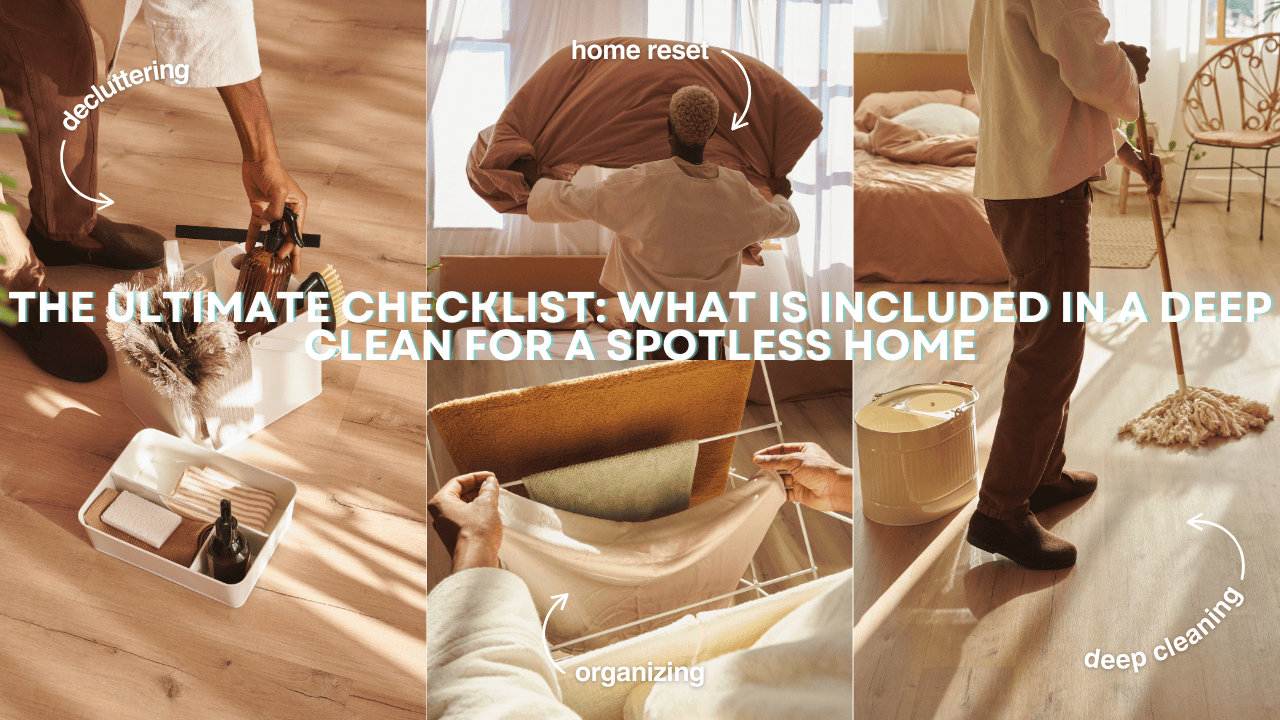
The Ultimate Checklist: What Is Included in a Deep Clean for a Spotless Home
Is your regular cleaning routine leaving you feeling like something’s… still dirty? You wipe down counters, vacuum carpets, and tidy up, yet a layer of grime seems to linger in corners, on baseboards, and behind appliances.
Table of Contents
We’ll move beyond surface cleaning to target the hidden dirt and often-neglected spots that truly define a deep clean.By the end, you’ll have a complete blueprint to transform your home from simply clean to profoundly refreshed and sanitized.
What is a Deep Clean? (And How It Differs From Regular Cleaning)
Think of cleaning your home like caring for your car. A regular clean is the quick car wash—it gets the surface dirt off and makes things look presentable. A deep clean, however, is the full-detail service.
It’s a meticulous, top-to-bottom process designed to scrub away the accumulated grime, sanitize overlooked areas, and restore your home to a like-new state of cleanliness.
While your weekly or bi-weekly routine maintains order, a deep clean is a periodic reset. It targets the dirt you don’t see every day, tackling built-up grease, dust, soap scum, and germs in places regular cleaning misses.
Understanding what is included in a deep clean can help you appreciate the thoroughness required for a truly clean home.
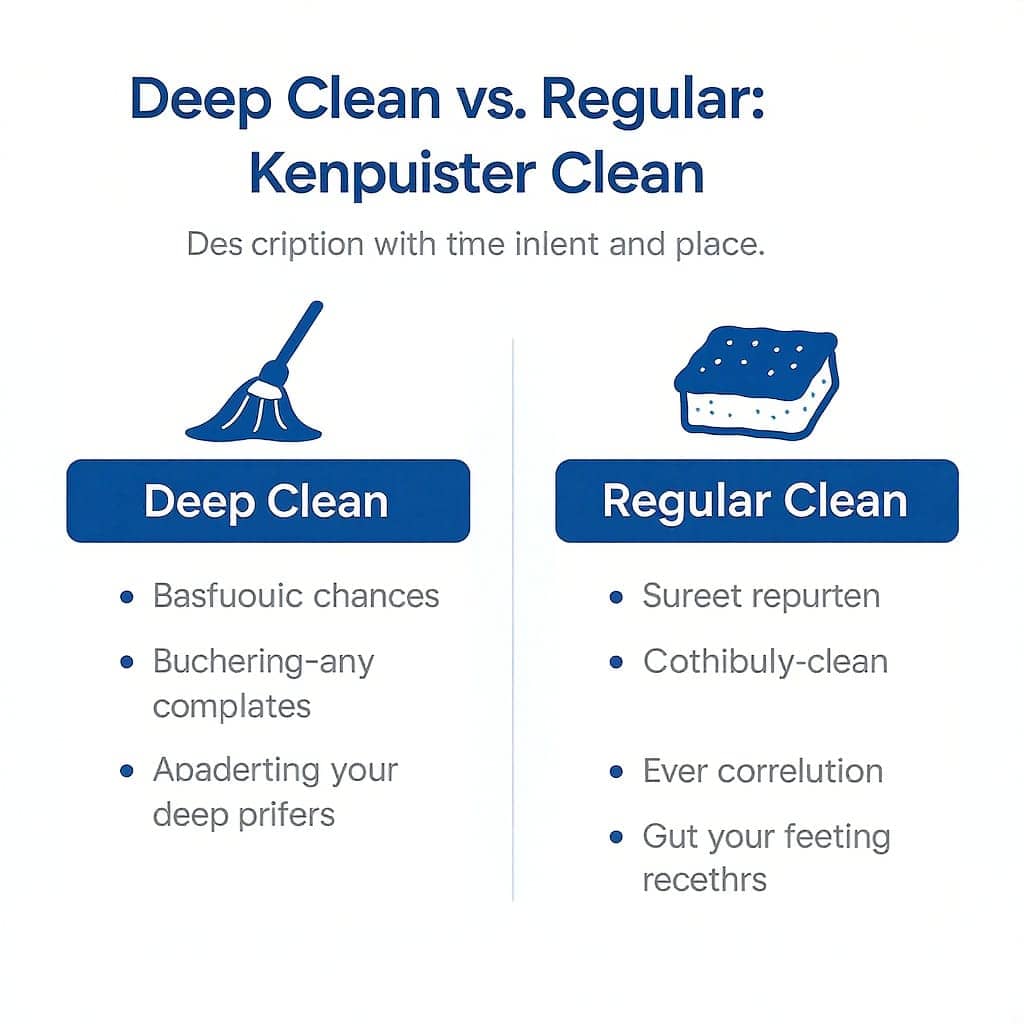
Here’s a quick, scannable breakdown of the key differences:
Regular Cleaning (Maintenance)
- Frequency: Weekly or bi-weekly.
- Focus: Surface-level tidiness and high-traffic areas.
- Goal: To maintain a baseline of cleanliness and order.
- Typical Tasks:
- Vacuuming visible floors.
- Dusting surfaces.
- Wiping down counters and appliances.
- Cleaning toilet bowls and sinks.
- Taking out trash.
Deep Cleaning (Restoration)
- Frequency: Seasonally (3-4 times a year) or during spring cleaning/move-ins/move-outs.
- Focus: Degreasing, descaling, sanitizing, and reaching neglected spots.
- Goal: To eliminate built-up dirt, allergens, and germs for a healthier, more thorough clean.
- Typical Tasks (A Preview):
- Moving appliances to clean behind them.
- Scrubbing grout and tile.
- Washing walls, baseboards, and window sills.
- Cleaning inside cabinets and the oven.
- Descaling showerheads and deep-sanitizing fixtures.
In short, if regular cleaning is about upkeep, deep cleaning is about renewal. It’s the definitive answer for anyone wondering, “What is included in a deep clean?”—a comprehensive effort that leaves no corner untouched. Now, let’s get into the specific checklist that makes it all happen.
Read More About Deep Clean a House
The Complete Deep Clean Checklist for Ceiling, Walls, Windows, and Floors
While our room-by-room guide covers specific spaces, deep cleaning the core “shell” of your home—the ceilings, walls, windows, and floors—is what delivers that all-over, transformative freshness. This vertical checklist ensures no surface is overlooked.
Ceilings & High Surfaces: Look Up!
Dust and cobwebs settle up high and slowly drift down, undermining your other cleaning. Tackle these first.
- Cobweb Patrol: Use an extendable duster to remove cobwebs from all ceiling corners, light fixtures, and ceiling fan blades.
- Fan Blade Detail: Wipe each fan blade with a damp microfiber cloth. For grease (especially in kitchens), add a drop of all-purpose cleaner.
- Light Fixtures: Turn off the power at the breaker. Carefully remove glass/plastic covers and wash them in warm, soapy water. Wipe down the fixture base and bulbs (once cool) with a dry cloth.
- Ceiling Vents & Smoke Detectors: Vacuum air supply and return vent covers with a brush attachment. Gently vacuum smoke/CO detectors to remove dust (avoid chemicals).
- Crown Molding & Trim: Dust with a long-handled microfiber duster, then follow with a slightly damp cloth to pick up remaining residue.
Walls: The Often-Ignored Canvas
Walls collect dust, scuffs, and splatters. A wall clean brightens the entire room.
- Dust First: Use a soft broom or a dry microfiber mop head attached to a long handle to dust walls from top to bottom.
- Spot-Clean Scuffs & Spots: For painted walls, use a magic eraser (test in an inconspicuous area first) or a damp cloth with a bit of baking soda for gentle abrasion on marks.
- Washable Walls: For kitchens or bathrooms with grease/splatter, mix a solution of warm water and a few drops of gentle dish soap. Wipe a small section at a time with a soft sponge, then immediately dry with a clean cloth to avoid streaks.
- Focus on Switches & Plates: Remove faceplates from light switches and outlets. Wash them in soapy water, dry thoroughly, and reattach. Wipe the actual switch/outlet with a disinfectant wipe (ensure it’s dry before turning power back on).
Windows: For Clarity Inside & Out
True deep cleaning isn’t just the glass; it’s the entire window unit.
- Interior Glass: Clean with a streak-free solution (vinegar/water or commercial cleaner) and a squeegee or crumpled newspaper for a lint-free shine.
- Window Tracks & Sills: This is a deep-clean essential. Use a vacuum crevice tool to suck out all dirt, dead insects, and debris. Scrub with an old toothbrush and all-purpose cleaner, then wipe dry.
- Window Frames & Screens: Wipe down interior frames with a damp cloth. Remove insect screens (if possible) and vacuum both sides before rinsing gently with a hose. Let dry completely before reinstalling.
Floors: The Final, Foundational Finish
Always save floors for last, as everything from above will settle on them.
- Clear & Vacuum Thoroughly: Move all furniture and rugs. Use the appropriate vacuum attachment for hard floors (hard floor setting) and carpets. Go slowly to pick up embedded dirt. Don’t forget under furniture and along baseboards.
- Baseboard Detail: Wipe down baseboards throughout the house with a damp microfiber cloth. For textured baseboards, use a dryer sheet first to help repel future dust.
- Hard Floor Mopping: Use hot water and the recommended cleaner for your floor type (vinyl, hardwood, tile). Change the mop water frequently as it gets dirty. Allow to air dry completely before walking on it or replacing furniture.
- Carpet Deep Treatment: For high-traffic areas, pre-treat spots with a carpet cleaner. Consider renting a carpet steamer annually for a full sanitization that extracts deep-down dirt and allergens.
- Final Dry Mop/Buff: For hard floors, a final pass with a dry microfiber mop can eliminate any last streaks and give a beautiful shine.

Pro Tips for an Efficient and Effective Deep Clean
A deep clean is a project, but it doesn’t have to be a painful marathon. With the right strategy and tools, you can work smarter, not harder. These pro tips will help you tackle that “what is included in a deep clean” checklist efficiently and with stellar results.
Gear Up: The Must-Have Tools & Products
Don’t start at a disadvantage. Having the right arsenal makes every task quicker and more effective.
- Microfiber is King: Invest in a set of color-coded microfiber cloths (e.g., blue for glass, yellow for dusting, red for bathrooms) to prevent cross-contamination. They trap dust and grime without leaving lint.
- Extend Your Reach: An extendable duster is essential for ceiling fans, crown molding, and the tops of cabinets.
- Vacuum Versatility: Ensure your vacuum has a HEPA filter (for allergens) and a full set of attachments—the crevice tool and upholstery brush are deep clean MVPs.
- Scrub Squad: Have a variety of brushes: a stiff grout brush, a soft-bristled brush for delicate surfaces, and an old toothbrush for tiny crevices.
- Cleaning Concentrates: Instead of a cabinet full of single-use sprays, get a quality all-purpose cleaner, a dedicated degreaser (for kitchens), a bathroom disinfectant, and a glass cleaner. White vinegar and baking soda are great eco-friendly additions.
The Deep Clean Mindset: Strategy Saves the Day
Your approach is just as important as your products. Follow these principles to maintain energy and focus.
- Left-to-Right Rule: Always start dusting and cleaning at the highest point in a room (ceiling fans, shelves) and work your way down to the floors. Work systematically around the room (left to right) so you never double-back or miss a spot.
- Declutter First, Clean Second: Before you clean any surface, remove all items. Clear countertops, shelves, and floors. This allows for unobstructed cleaning and lets you wipe down the items themselves before putting them back organized.
- The “One Room at a Time” Victory: Completing an entire room is a huge psychological win. Stick to one space until it’s fully done (using our checklist above) before moving to the next. This gives you a tangible sense of progress.
- Set a Timer & Take Breaks: Deep cleaning for 45 minutes followed by a 15-minute break is far more sustainable than a 4-hour grind with burnout. Use the Pomodoro Technique to stay fresh.
- Tackle the Worst First: Start with the task or room you dread most (often the oven or shower). Getting it out of the way first makes the rest of the clean feel easier.
Pro Tip for USA Homes: For hard water areas (common in many US states), keep a dedicated lime/scale remover for showerheads and faucets. For dust-prone, dry climates, consider using a slightly damp mop on hard floors after vacuuming to trap the final layer of dust.
By implementing these tips, you transform the deep clean from a daunting chore into a streamlined, successful project. You’ll cover everything included in a deep clean without wasting time or energy.
Conclusion & Call-to-Action
A deep clean is more than just a chore—it’s an investment in your home’s comfort, hygiene, and overall feel. By moving beyond the surface and methodically tackling everything included in a deep clean, from the forgotten ceiling corners to the grime in window tracks, you’re not just cleaning; you’re renewing your space.
This comprehensive checklist transforms an overwhelming project into a series of manageable, victorious tasks. Remember, you don’t have to do it all in one day. Pace yourself, use the pro tips to work efficiently, and celebrate each completed room.
The result? A home that doesn’t just look clean but feels profoundly fresh, sanitized, and revitalized—a true sanctuary for your everyday life.
FAQs
How often should I do a deep clean vs. a regular clean?
You should do a regular clean weekly or bi-weekly to maintain surface-level tidiness. A deep clean is recommended seasonally (about 3-4 times a year), or during special times like spring cleaning, before/after hosting major events, or when moving in/out of a home. It addresses the built-up grime that regular cleaning misses.
What’s the most important tool for a successful deep clean?
While quality products matter, a good vacuum with a HEPA filter and attachments (crevice tool, brush) is arguably the MVP. It allows you to effectively remove dust and allergens from upholstery, vents, corners, and hard-to-reach areas, which is a cornerstone of deep cleaning.
I don’t have time for a full deep clean in one day. What should I do?
Break it down! The most efficient strategy is the “one room per day” or “one task per day” approach. Dedicate 45-60 minutes after work to completely deep clean just the kitchen one night, and the bathrooms the next. Spreading it over a week or weekend is just as effective and prevents burnout.
What are the most commonly forgotten areas in a deep clean?
Top of ceiling fan blades and door frames
Inside kitchen and bathroom cabinets (under sinks, organizing contents)
Window tracks and sills
Behind and under large appliances (refrigerator, stove, washer)
Light switch plates and doorknobs (high-touch, high-germ areas)
Can I deep clean effectively with natural products like vinegar and baking soda?
Yes, absolutely. A solution of white vinegar and water is excellent for descaling faucets and cleaning glass, while baking soda works wonders as a gentle abrasive for scrubbing grout and deodorizing carpets. For disinfecting, however, you may need a dedicated disinfectant or a bleach solution (carefully diluted) for certain surfaces, especially in bathrooms, to ensure you’re killing germs effectively.